
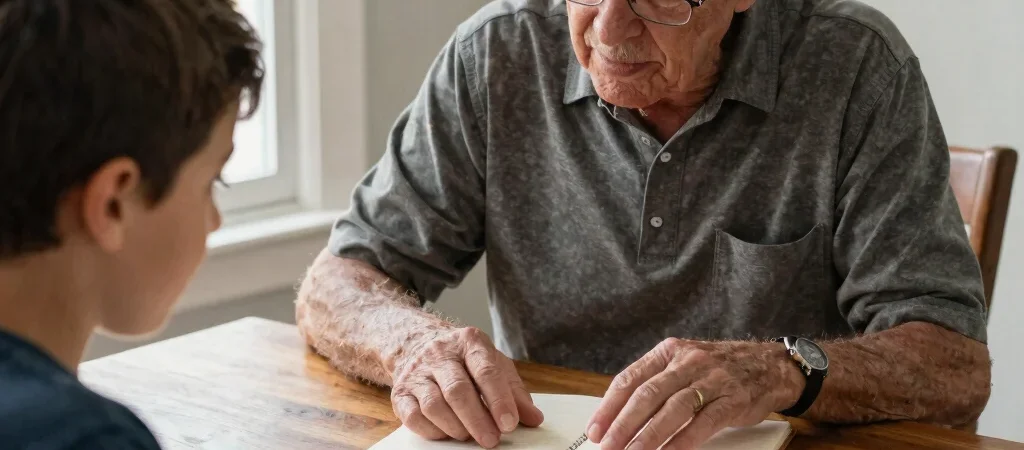
A familiar recipe can bring back a kitchen, a neighbor, or a detail no one else in the family remembers. Instead of waiting for the perfect time to record family history, make space for stories as they come up. A few thoughtful questions and a simple way to save the answer can preserve the texture that a polished summary might miss.
Ask for one small detail
Broad questions such as “Tell me about your childhood” can feel like homework. Try asking what music played at family gatherings, who taught them a favorite recipe, or what the walk to school looked like. Concrete prompts make it easier to begin, and the answer may lead somewhere unexpected.
Choose an easy way to keep it
A notebook, a voice memo on a phone, or a dated recipe card can all work; choose the method the storyteller is comfortable using. Ask before recording, and check whether they want the story shared with other relatives or kept private. A few notes about who is speaking and when the story was told can help future generations understand the context.
Leave room for their voice
You do not need to correct every date or fill every gap while someone is remembering. Keep their phrases when you can, and mark details you are unsure about rather than quietly turning them into facts. Stories can belong to one person’s memory even when another relative recalls things differently.
If you choose a notebook or recording tool, use what suits your family rather than buying something elaborate. Some links to notebooks or recording tools may be affiliate links, which means GrandparentCrew may earn a commission at no extra cost to you. The keepsake is the story; the tool is just a way to help it stay with the family.